Learn · Woodworking basics
Screws, nails, pocket holes and dowels
Fasteners hold a joint while the glue dries, or hold it on their own where glue can’t. This guide covers which one to reach for, and how to size it so it holds without splitting the wood.
Wood screws
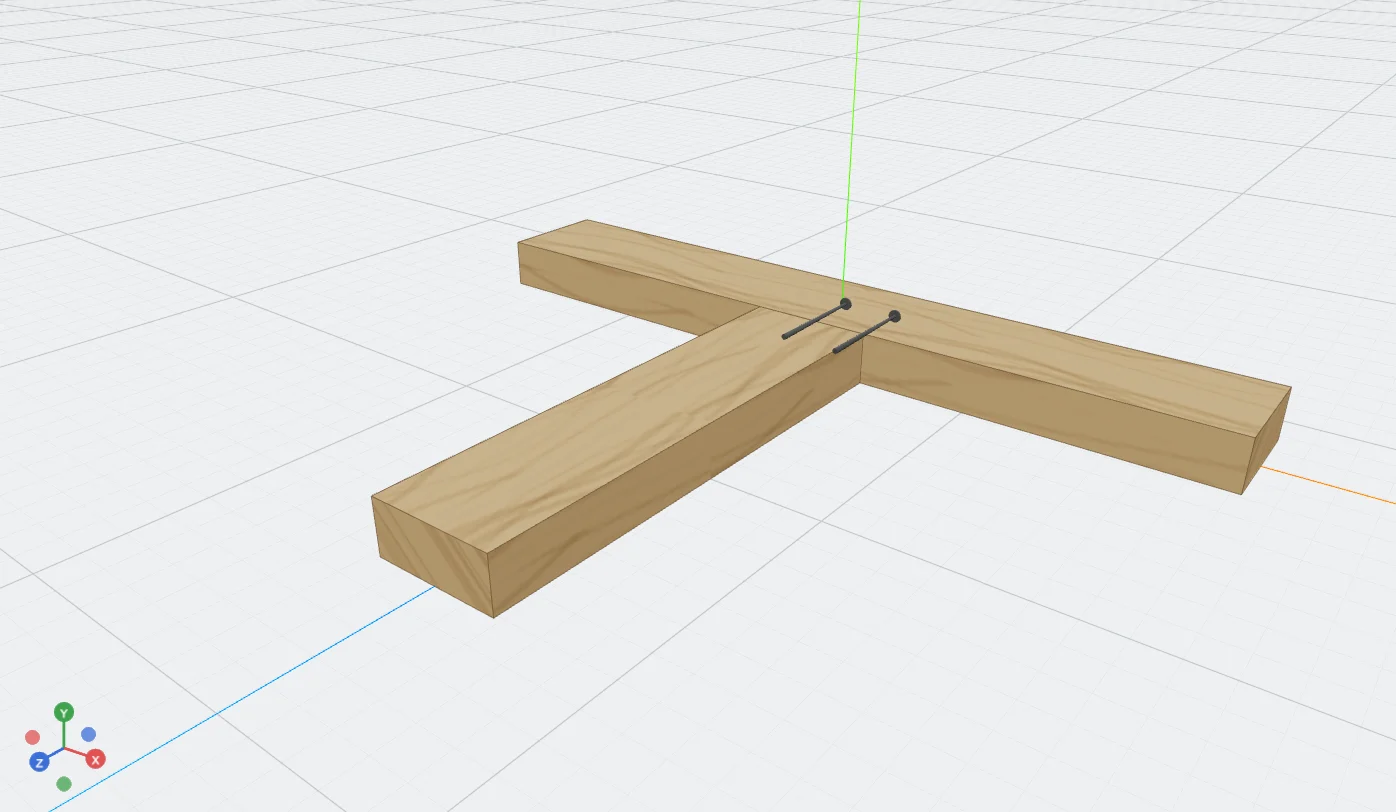
Screws pull two parts tight and can come out again, which makes them the everyday choice for shop furniture, cabinets and jigs. Square-drive and star-drive (Torx) heads strip far less than Phillips.
- Length: as a rule of thumb, the screw should go into the second piece at least as far as the first piece is thick. Make sure it won’t come out the far side.
- Clearance hole: in the first piece, drill a hole the size of the screw’s shank, so the screw can pull that piece tight against the second instead of holding them apart.
- Pilot hole: into the second piece, drill a smaller hole, about the size of the screw’s core, so the wood doesn’t split. It matters most in hardwood and near the ends of boards. The screw box or the maker’s chart gives the drill size.
- Countersink the hole so a flat-head screw sits flush, or drill deeper and cover the head with a wooden plug.
- Keep screws an inch or so from the ends of boards, where they’re most likely to split them.
Pocket-hole screws
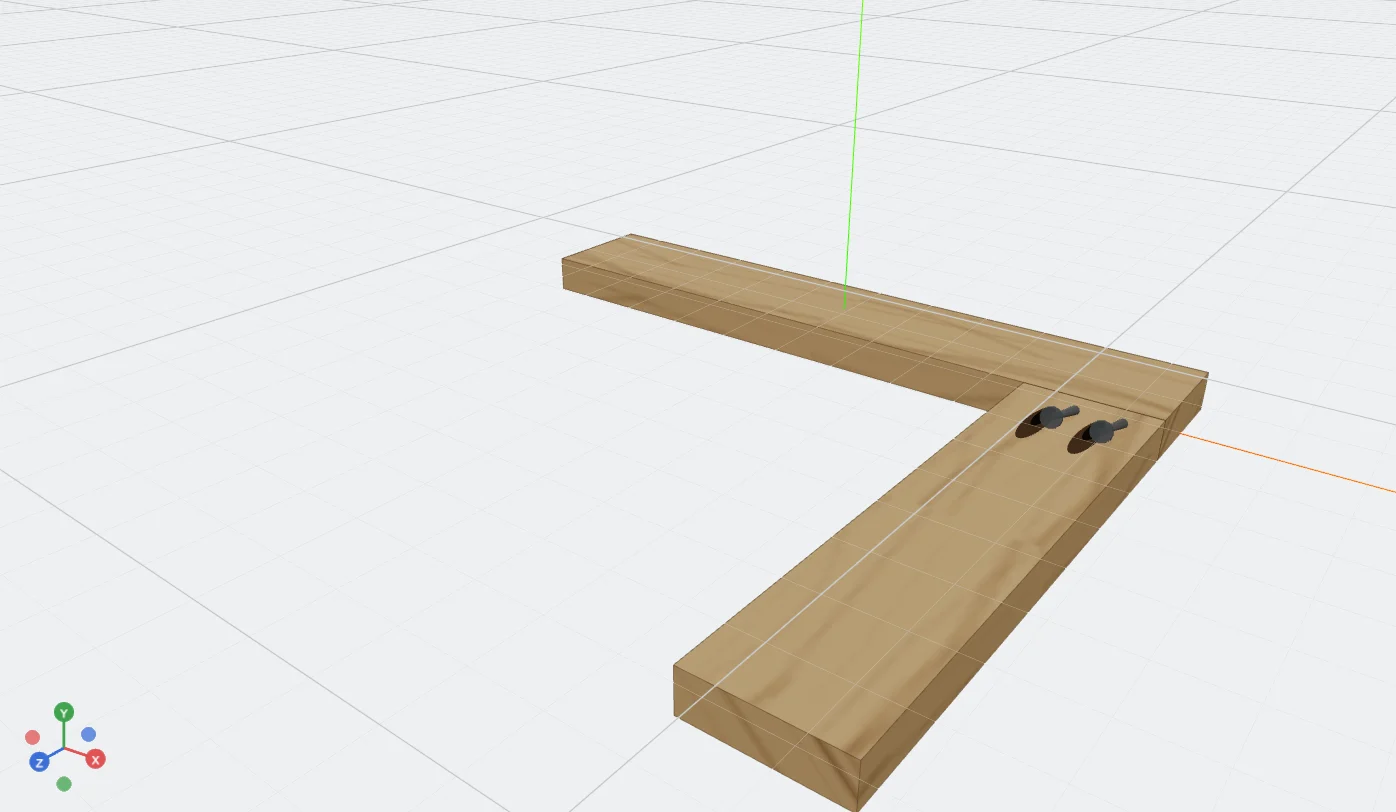
A pocket-hole jig drills a hole at a steep angle (15° on Kreg jigs) into the face of one board, so a screw goes through its end into the other board. It makes a strong, hidden butt joint in minutes, without waiting for glue to dry in clamps. That’s why pocket holes are a favorite for face frames, cabinet boxes and tabletops, and for first projects.
- Set the jig and pick the screw by the wood’s actual thickness, not its nominal size. Kreg’s chart pairs 1" screws with 1/2" stock and 1-1/4" screws with 3/4" stock, and Kreg uses 2-1/2" screws for 1-1/2" stock such as a 2x4.
- Coarse thread for softwoods (pine, fir, cedar), poplar, plywood and MDF. Fine thread for hardwoods such as oak, maple, cherry and walnut, which coarse threads can split.
- Outdoors, use screws coated for it or stainless steel, not plain zinc-plated ones.
- Put the pocket holes on faces that won’t show: the inside of a cabinet, the underside of a tabletop.
Nails
- Pin nails (23 gauge) and brad nails (18 gauge) are thin. They hold trim and small moldings, or hold a glued joint while it dries, and leave tiny holes. They don’t add much strength.
- Finish nails (15 and 16 gauge) are thicker. They hold trim, face frames and cabinet backs.
- Framing nails build decks, sheds and walls. The building code sets which nails, and how many, for each connection, so follow your local code.
Nails resist being pushed sideways well, but pull out more easily than screws. Driving them in pairs at opposite angles helps them hold.
Dowels
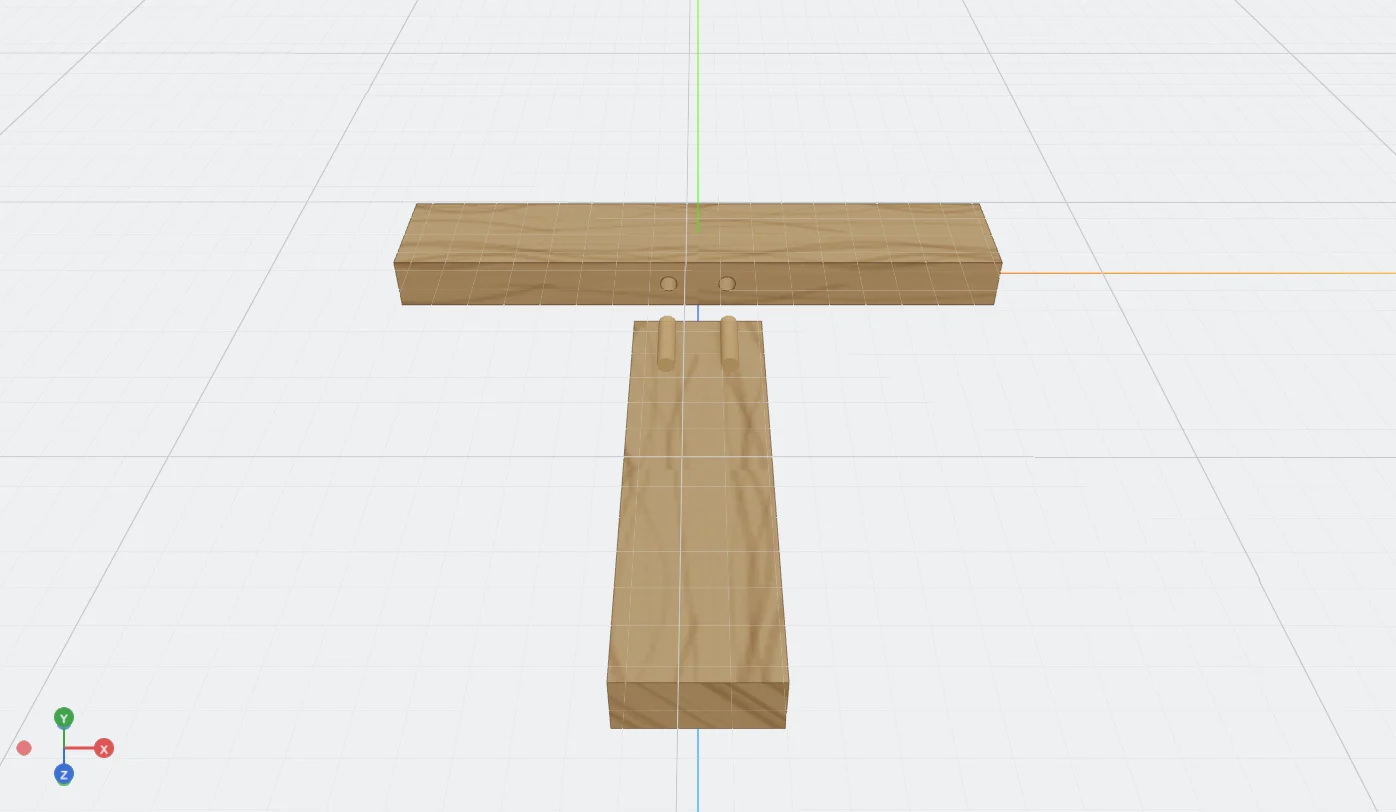
Dowels are short wooden pins glued into matching holes in both parts. They line the parts up exactly and add long-grain glue area to a joint that would otherwise be end grain. A doweling jig keeps the holes straight and in line.
- Size: a common choice is a dowel about a third to half as thick as the board: 3/8" dowels in 3/4" boards.
- Depth: drill each hole a little deeper than half the dowel’s length, so the joint closes before the dowel bottoms out.
- Grooved dowels let air and extra glue escape as you push them in.
Fasteners for outdoor projects
Pressure-treated lumber contains copper preservatives that corrode plain steel, so everything that goes into it must be rated for treated wood: hot-dip galvanized, stainless steel, or screws coated for it.
- Deck screws fasten deck boards, fence boards and trim.
- Structural screws are made to replace lag screws and bolts in connections like ledgers and beams. Use them only where the maker’s ratings say you can.
- Carriage bolts go right through, with a washer and nut, for posts and beams that carry a load.
- Steel connectors, such as joist hangers and post bases, carry loads between framing members. Use the nails or screws the maker specifies, in every hole they call for: the wrong ones can make a hanger fail.
And glue
In furniture, glue often does more of the holding than any screw. See How to glue and clamp wood.
In Lumbr Studio, each joint’s fasteners are sized for the wood they go through, laid out where you’d drive them, and counted on the cut list.